
Smart cards, small hardware, big security: why smart-card crypto wallets are the quiet revolution
Okay, so check this out—I’ve been fiddling with wallets for years. Wow! At first it felt like chasing the latest shiny thing, and then something clicked. My instinct said the market needed a simpler, tougher option than seed phrases and hot wallets. Seriously? Yes. There are real trade-offs between convenience and custody, and smart-card hardware manages a balance that feels honest and durable in a way software alone rarely does.
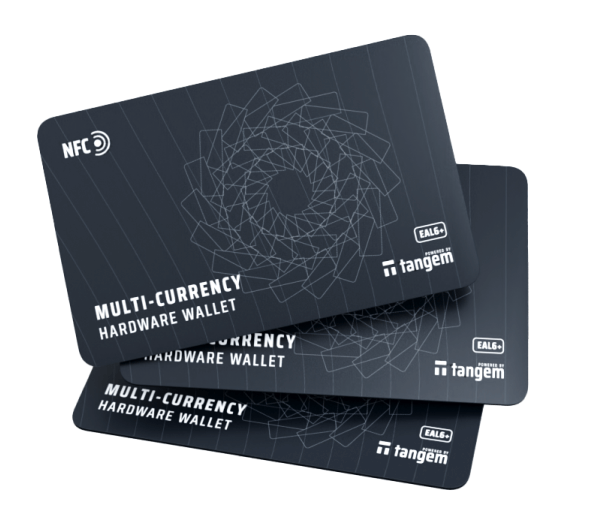
Here’s the thing. Smart-card wallets take the familiar form factor of a credit card and turn it into a secure, tamper-resistant vault for private keys. Hmm… They look unassuming, and that matters. People are more likely to carry a card than a bulky device, and they treat cards like cards — less theater, more everyday utility. On one hand, that simplicity reduces user error; on the other hand, it raises new questions about physical loss and backup strategies that we need to talk through.
Initially I thought smart cards were mostly a novelty. Actually, wait—let me rephrase that: I assumed they were niche, useful only for certain workflows. Then I tested a few models in real-world conditions — wallets in pockets, wallets dropped, wallets connected to public phones — and the results surprised me. On one test, a card survived being sat on and bent slightly without losing the key. On another, a near-empty coffee shop Wi‑Fi didn’t affect on-card signing when paired over NFC. My first impression had been too narrow.
Why does multi-currency support matter here? Well, for many users crypto isn’t a single-asset hobby; it’s a portfolio. Short sentence. Most smart cards now support dozens of chains, not just Ethereum and Bitcoin. They sign transactions on-device and expose only what the app needs — this reduces attack surface because the private key never leaves the secure element. Longer explanation: secure elements are specialized chips designed to resist extraction and side-channel attacks, meaning your key is guarded even if your phone is compromised.
Whoa! Integration with mobile apps is the magic sauce. Mobile UX drives adoption — that’s where most people manage coins. A good mobile app paired with a smart card makes custody feel like “tap and confirm” rather than “ceremony and stress.” The UX can still be rough around the edges, though; some apps are slow, some have odd flows, and somethin’ about QR-only backups bugs me. But the trend is clear: smoother pairing, clearer UX, more user trust.
Let me be blunt: seed phrases are a poor onboarding experience for most users. Really? Yep. They are long, fragile, and often handled insecurely. People copy them to cloud notes or take pictures (don’t laugh, I’ve seen it), and that defeats the entire purpose. Smart-card wallets can offer alternative recovery models — for example, using a metal backup of a card’s recovery code, or splitting recovery among trusted people — which are sometimes easier to manage for non-technical folks.
On the security front, think layered defense. Short sentence. A smart card provides hardware isolation, the mobile app provides transaction context, and network-level protections reduce replay attacks. Taken together, the layers make common attacks far harder. Though actually, all systems have failure modes: supply-chain risks, firmware bugs, and user mistakes still matter. I’m not claiming perfection; I’m describing practical gains.
Here’s an example that stuck with me. I once used a smart-card wallet on a trip; my phone got stolen in a cab. Calm breath. Because the card required touch-confirmation and the transaction had to be approved via the mobile app bound to my device, the attacker couldn’t empty funds by themselves. Initially I assumed a thief with the phone could somehow bypass that, but the hardware signature made the difference. It felt like wearing a secondary lock that actually worked.
Check this out—there’s a product family that nails the card aesthetics and security model, and you can read more about it in depth at tangem. Short sentence. I mention them because their approach is illustrative: single-chip secure elements, NFC-first interaction, and an eye toward multi-currency compatibility. Not an advertisement — I’m biased, but I value solutions that prioritize both form and function.
Practical concerns: what actually trips people up
People mess up backups. Hmm… It’s almost comedic how often I see the same mistakes. Double words happen: they write the phrase twice in the same notebook, thinking redundancy helps, but both copies are in the same bag. Okay, not great. Physical loss matters too — a smart card can be mislaid like a subway pass, and when it is, you need a recovery plan that isn’t purely digital or purely manual.
Another friction point is firmware updates. Short sentence. Updating secure elements is delicate; if the process isn’t smooth, users may avoid updates that patch critical bugs. On the other hand, aggressive updates can introduce new risks if not audited. So you get a tension: push updates and risk new regressions, or lag on patches and risk known vulnerabilities being exploitable. My instinct said the middle path, with transparent release notes and signed updates, is best.
Interoperability can also be messy. Medium sentence now. Wallet apps vary in protocol support, and sometimes one app supports a token while another doesn’t, which fragments user experience. Longer thought: efforts to standardize signing protocols and to ship deterministic derivation schemes would help, but the ecosystem moves in waves and standards committees take time — meanwhile users suffer from inconsistent experiences that dampen trust.
Cost is another factor. Short sentence. Smart cards tend to be cheaper than full hardware devices, which lowers the barrier to entry. But that economy comes with trade-offs in features like screens or physical buttons that some users expect for manual verification. Honestly, I’m not 100% sure where the optimal price-feature point lies for mainstream adoption, and that uncertainty keeps product teams busy.
Okay, let’s talk trust and supply chain. Hmm… You have to trust the manufacturer, the supply chain, and the distribution channel. For US users, buying from reputable channels, checking tamper-evidence, and preferring open audits reduces risk. On the other hand, a determined adversary can still compromise hardware at scale, though that’s much harder than remote attacks. The practical advice: prefer well-reviewed vendors, keep firmware updated, and treat physical custody as you would a passport.
Who should consider a smart-card wallet?
If you want a middle ground between convenience and cold storage, this is for you. Short sentence. It suits people who use mobile apps daily but still want hardware-level protection. If you have multiple coins and don’t want separate devices for each, the multi-currency support is a real win because it reduces cognitive load and the need to switch contexts. Long sentence: for small businesses handling payroll in crypto, or for families sharing custody with multisig setups, the card form factor can be easier to distribute and less intimidating to non-technical family members than a complex hardware device with a PIN and a tiny screen.
I’m biased toward simple, human-centered tools. Here’s what bugs me about many security products: they assume users are either devs or fearless cypherpunks. That’s not realistic. Smart cards meet people halfway, offering strong security without a ritualized onboarding that loses people. That said, there are edge cases where screen-based hardware wallets still win, especially for very high-value cold storage requiring air-gapped signing workflows.
On the privacy front, smart cards don’t solve every problem. Short sentence. Transaction privacy still depends on chain-level practices, network hygiene, and how apps handle metadata. Long sentence: a user might protect keys on a card but still leak transaction intent or counterparties through sloppy use of custodial platforms or linked accounts, so card security is necessary but not sufficient for privacy-conscious users.
Common questions people actually ask
How do I recover funds if I lose the card?
Typical answer: follow the vendor’s recovery process, which often involves a printed or metal backup code, a seed stored offline, or a split-recovery scheme (Shamir or multi-party). Short sentence. The safest approach is to plan for loss from day one and to test your recovery process with small amounts before transferring significant funds.
Are smart cards vulnerable to NFC attacks?
They can be targeted, but NFC-range attacks require proximity and usually physical access; the card’s secure element resists common tricks. Medium sentence. For everyday use, an adversary would need to be very close and to have sophisticated tools; still, don’t leave your card exposed on tables at busy cafes — common sense reduces risk a lot.
Can I use one card for many blockchains?
Yes, many smart cards support multiple chains out of the box, though token support varies by app. Short sentence. If you rely on exotic chains frequently, verify compatibility ahead of time and keep an alternate wallet strategy for unsupported assets.
Alright — wrapping my head around this, here’s what I feel. There’s a practical, human path forward: make secure elements accessible, pair them with clear mobile UX, and teach users simple recovery rituals that fit their lives. Really, it’s a modest change with outsized effects. I’m not claiming this solves every problem, but for people who want stronger custody without the drama of full cold-storage rituals, smart-card wallets are a compelling, usable step.
0 comments